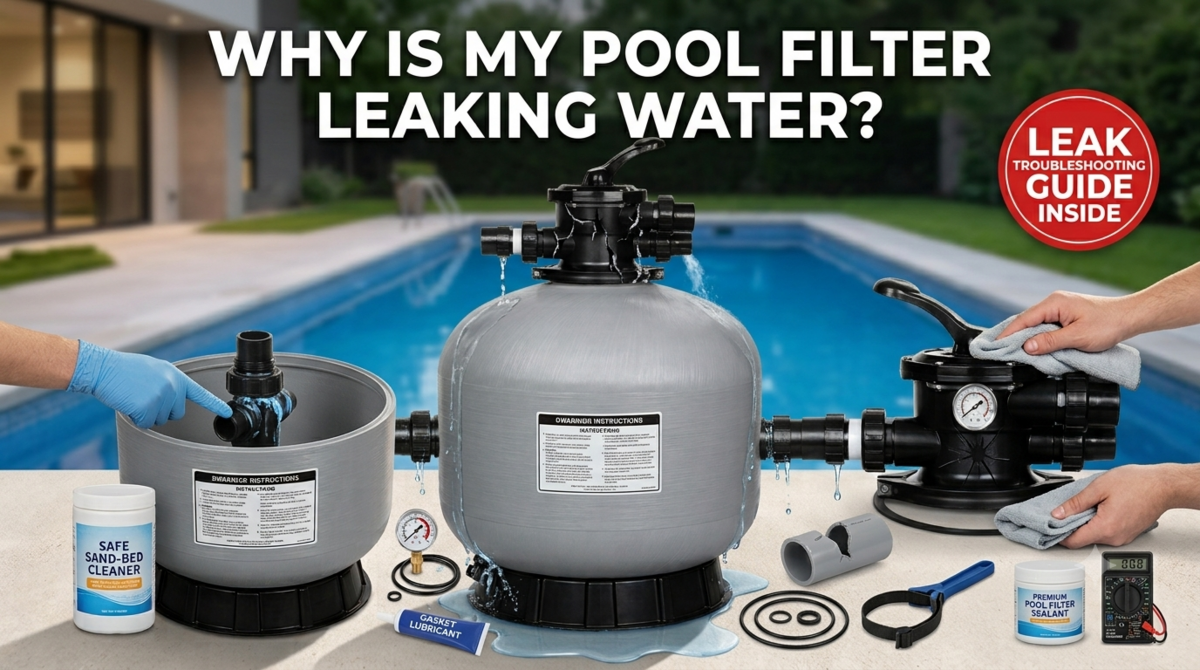
A pool equipment pad should remain dry during operation. If you walk outside and ask, "Why is my pool filter leaking water?" you need to act quickly. Unresolved leaks waste chemical-treated water, flood your yard, and can damage your pump motor through dry running.
Featured Snippet Answer
A pool filter leaks water due to a degraded tank lid O-ring, cracked filter housing, loose plumbing unions, or a compromised multiport valve spider gasket. Turn off the power, inspect the seals for tears, apply silicone lubricant to gaskets, and tighten loose fittings to stop the leak.
Common Reasons a Pool Filter Leaks
pinpointing the source of a swimming pool filter leak helps determine if you need a quick adjustment or a replacement part.
- Damaged O-Rings: The large pool filter O-ring seals the two halves of the filter tank. Over time, rubber dries out, cracks, and permits water to spray out under pressure.
- Cracked Filter Tank: Due to age, UV exposure, or freezing winter conditions, the plastic or fiberglass pool filter housing leak can develop structural splits.
- Loose Plumbing Connections: Vibrations from the equipment pad loosen PVC unions and threaded adapters over time.
- Leaking Multiport Valve: A worn internal spider gasket allows pool water to continually drip out through the backwash/waste line.
- Defective Drain Plug: The small plug at the bottom of the tank used for winterizing can experience stripped threads or a missing gasket.
Step-by-Step Inspection and Fix Guide
Follow this protocol during pool equipment maintenance to safely locate and resolve leaks:
Step 1: Shut Down System ---> Step 2: Relieve Pressure ---> Step 3: Inspect Seals & Shell
Step 1: Isolate the Leak Source
Wipe down the entire filter tank with a dry towel while the system runs to see exactly where water starts weeping.
Step 2: Turn Off Power and Relieve Pressure
Shut off the pump breaker. Open the air relief valve on top of the filter tank until the pressure gauge drops to zero. Never open a filter tank under pressure.
Step 3: Fix Tank Lid Leaks
Remove the belly band clamp or top lid. Take out the O-ring, clean away dirt, and check for tears. If it is intact, coat it generously with a silicone-based pool lubricant. If it is flat or cracked, replace it.
Step 4: Tighten Fittings and Plugs
Hand-tighten loose PVC unions. Wrap stripped drain plug threads with Teflon tape before re-inserting them.
When Tank Replacement is Mandatory
If you discover a crack in the main body of the pressure tank, do not attempt to patch it with epoxy or glue. Pool filters operate under intense pressure. A cracked tank shell can fail catastrophically, creating a serious safety hazard. Replace cracked tanks immediately.
Frequently Asked Questions (FAQs)
Q: Can I patch a crack in my pool filter tank?
A: No. Pool filter tanks operate under high pressure. Patching a crack with glue or epoxy is unsafe and can cause the tank to burst open violently under load.
Q: What type of lubricant should I use on pool O-rings?
A: Always use a silicone- or teflon-based pool lubricant. Never use petroleum jelly (like Vaseline), as petroleum degrades rubber quickly.
Q: Why is water leaking out of my backwash line?
A: This usually means the spider gasket inside your multiport valve is worn, torn, or unseated, allowing water to escape out the waste line during normal operation.
Q: Why does my filter leak only when the pump turns off?
A: When the pump shuts down, water rushes backward, creating a brief vacuum shift. A slightly loose lid clamp or an unlubricated O-ring will allow water to escape during this pressure drop.
Q: How long do pool filter O-rings last?
A: Pool filter O-rings generally last 2 to 3 years. Keeping them clean and well-lubricated extends their lifespan.
Conclusion
Answering "Why is my pool filter leaking water?" early saves your equipment pad from erosion and protects your pump motor. Implement routine inspections as part of your weekly swimming pool maintenance routine. Swap out worn gaskets yearly, and always call in a pool professional if structural components fail.