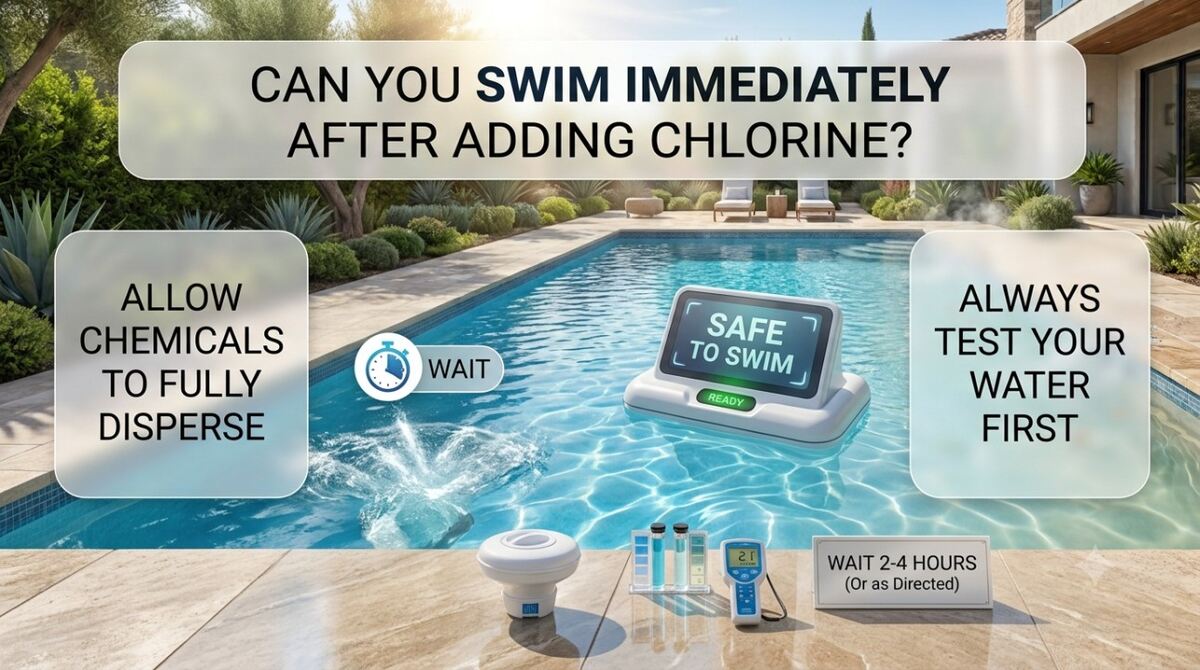
Adding pool chlorine is an essential part of regular upkeep, but it often sparks a critical safety question: how long do you actually have to wait before jumping back into the water? While it is tempting to dive in right away, swimming too soon after chemical applications can expose you to raw, concentrated chemicals. Prioritizing chlorine safety protects your health and gives the chemicals adequate time to mix completely. Understanding proper waiting periods guarantees that your swim is refreshing rather than hazardous.
How Chlorine Works
Before calculating wait times, it helps to understand what happens when sanitizer enters your pool. The primary goal of swimming pool chlorine is sanitization—neutralizing microscopic pathogens, viruses, and bacteria that thrive in standing water.
When chlorine dissolves, it splits into active sanitizing agents like hypochlorous acid. This process breaks down organic material and keeps the water safe for humans. However, during the initial mixing phase, specific areas of the pool contain highly concentrated chemical zones that must dissipate before human contact.
How Long Should You Wait Before Swimming?
The required chlorine waiting time varies significantly based on the form of chemical you introduce. Always run your filtration system during and after adding chemicals to speed up circulation.
+-------------------------------------------------------------+
| CHLORINE APPLICATION WAIT TIMES |
+-------------------------------------------------------------+
| Liquid Chlorine: Wait 15 to 30 minutes |
| Chlorine Tablets: Safe to swim immediately (if balanced) |
| Granular Chlorine: Wait 2 to 4 hours |
| Pool Shock: Wait 12 to 24 hours (Test before swim) |
+-------------------------------------------------------------+
Liquid Chlorine
Because it is already in liquid form, liquid chlorine mixes rapidly with pool water. If your pump is running and providing strong circulation, it is generally safe to swim 15 to 30 minutes after pouring it in.
Chlorine Tablets
Slow-dissolving chlorine tablets release sanitizer gradually over several days. Because they do not create sudden chemical spikes, it is safe to swim immediately while they dissolve, provided your overall water parameters are already in a healthy range.
Granular Chlorine
Granular products take longer to dissolve completely than liquid variations. Swimmers should wait 2 to 4 hours to prevent undissolved chemical granules from coming into direct contact with skin or settling on the pool floor.
Pool Shock Treatment
A heavy chlorine shock introduces an intense, concentrated dose of sanitizer designed to kill severe algae or bacteria blooms. Because shocking spikes your chemical levels far past safe thresholds, you must wait 12 to 24 hours before entering the water.
Explore our professional-grade sanitizing solutions on our Pool Chlorine Product Page.
Safe Chlorine Levels for Swimming
Never rely entirely on time frames alone. The absolute safest way to verify if your pool is ready for swimmers is to test the water parameters directly.
- Ideal Free Chlorine Level: The safe, comfortable window for swimming is 1.0 to 3.0 ppm. Never enter a pool if the free chlorine measures above 5.0 ppm.
- Combined Chlorine: This value should remain below 0.2 ppm. Higher numbers indicate skin-irritating chloramines.
- pH Range: Your pH must register between 7.2 and 7.6. If the pH is unbalanced, it can cause severe eye discomfort regardless of the chlorine level.
Safety Tips Before Entering the Pool
Incorporate these proactive safety steps into your routine pool maintenance program:
- Test the Water First: Always use a reliable liquid kit or digital tester to verify chemical levels before anyone gets wet.
- Verify Circulation: Ensure your pool pump has been actively running for at least one full hour after chemical additions to remove concentrated hot spots.
- Read Manufacturer Instructions: Different chemical brands feature distinct concentrations; always follow the packaging's precise safety labels.
Expert Advice
As professional water treatment specialists, our top recommendation is to automate your chemical testing and shock schedules. Whenever you perform a heavy shock treatment, do so at twilight. This gives the pool a full 12 hours overnight to circulate, sanitize, and naturally lower its active chemical concentration down to safe swimming levels before the sun comes up the next day.
Featured Snippet & AEO Answers
Can you swim after adding chlorine?
Yes, but you must wait depending on the type of chlorine used. While you can swim immediately with slow-dissolving tablets, you should wait 15–30 minutes for liquid chlorine, 2–4 hours for granular chlorine, and up to 24 hours after a heavy shock treatment.
How long should you wait to swim after adding chlorine?
You should wait 15 to 30 minutes for liquid chlorine to mix completely, and 2 to 4 hours for granular chlorine to dissolve. Following a heavy pool shock treatment, wait 12 to 24 hours until free chlorine levels drop below 5.0 ppm.
What chlorine level is safe for swimming?
A free chlorine level between 1.0 and 3.0 parts per million (ppm) is perfectly safe and ideal for swimming. You should never swim if the free chlorine level measures above 5.0 ppm, as it can cause skin and eye irritation.
Can too much chlorine harm swimmers?
Yes, excessive chlorine levels can harm swimmers. Free chlorine levels above 5.0 ppm can cause severe eye irritation, skin rashes, respiratory issues, coughing, and can prematurely damage or fade swimwear and pool equipment.
Frequently Asked Questions (FAQs)
1. What happens if I swim in a pool right after it has been shocked?
Swimming immediately after shocking can cause chemical burns on the skin, severe eye inflammation, and lung irritation from breathing in strong chemical vapors. It can also bleach and ruin your swimwear.
2. Why do my eyes burn if the chlorine level is within a safe range?
Burning eyes are usually caused by an improper pH level (either too high or too low) or high levels of chloramines (combined chlorine). Chloramines form when chlorine mixes with body waste and requires shocking to fix.
3. Is it safe to swim while chlorine tablets are melting in a floater?
Yes, it is safe to swim with tablets in a floating dispenser, provided your overall free chlorine testing shows a reading between 1.0 and 3.0 ppm. Avoid touching or playing with the floating dispenser.
4. Does the pool pump need to run while waiting to swim?
Absolutely. Your pool pump must run continuously after adding any chemicals. The filtration system provides the necessary water circulation to dissolve products, distribute sanitizer, and eliminate concentrated chemical zones.
5. How can I lower my chlorine levels quickly if I added too much?
If you accidentally over-chlorinated, you can lower it by uncovering the pool and letting natural sunlight degrade the chlorine. Alternatively, you can use a commercial chlorine neutralizer (sodium thiosulfate) or partially drain and refill the pool with fresh water.
Conclusion
Can you swim immediately after adding chlorine? In most cases, it is best to wait. While tablets allow immediate swimming, liquid chlorine requires a brief window, and shock treatments demand a lengthy wait. Testing your pool water to ensure it falls within the safe 1.0 to 3.0 ppm window is the absolute best way to protect your family. Keep your pool safe, balanced, and ready for fun by browsing the premium water care supplies at Pearl Water today.